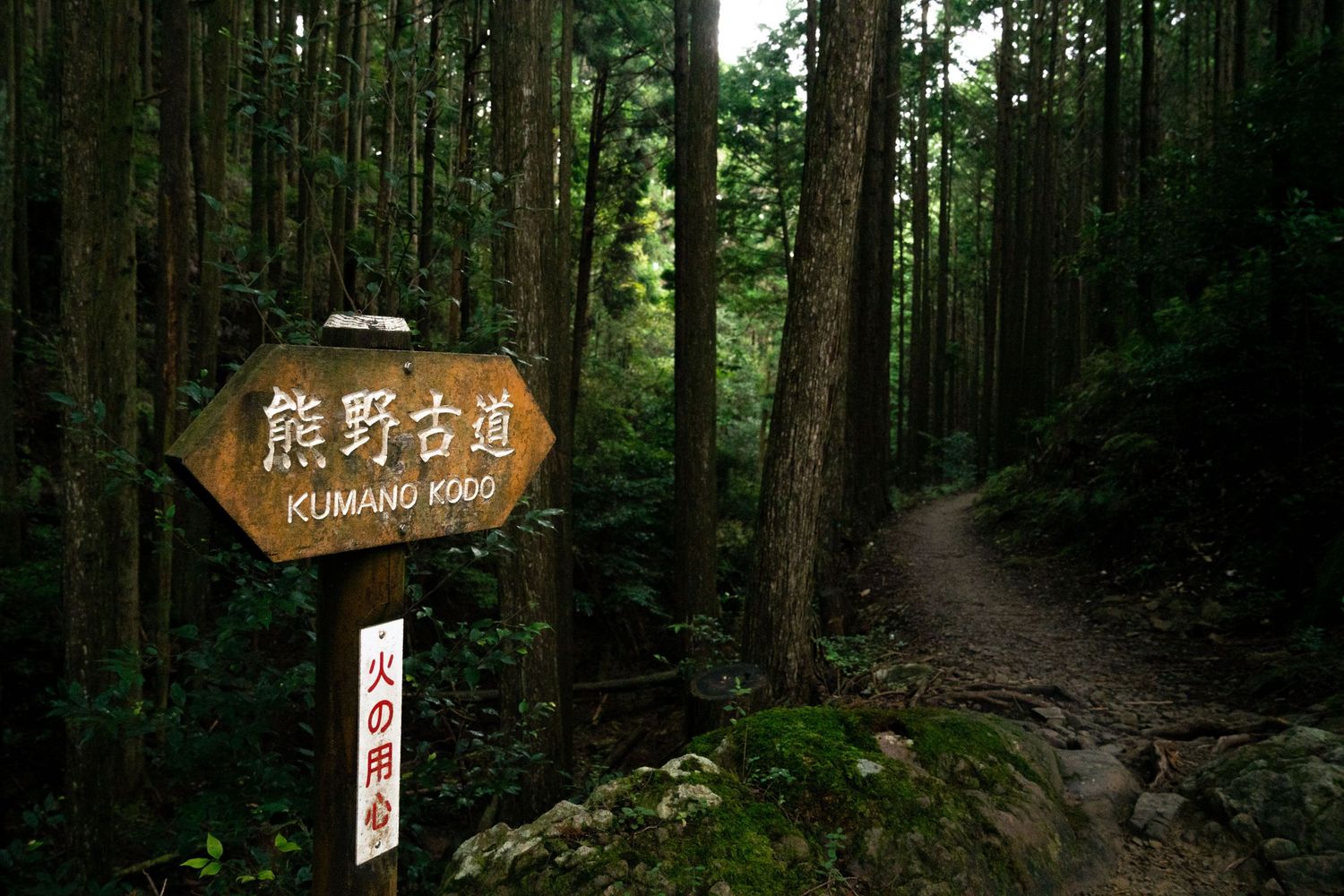
I had seen a few social media posts about this cool pilgrimage hike in southern Japan called the "Kumano Kodo" so of course I had to investigate. After a bit of research I came to the conclusion that it was doable on such short notice. Usually people will plan the trek a few months in advance and when doing so you can arrange for your luggage to be shuttled between stops on the trail for you, and you can stay at nice traditional hotels (ryokan) with many of them having natural hotsprings (onsens). However that is not me
I trained down to Kyoto from Tokyo to get closer to the hike and grab some necessary supplies like a tent. I did not want to spend much money for gear that I might only use while being in Japan. After some research online I saw that some people recommended going to thrift stores. So after getting to kyoto I took the trains out to the suburbs to investigate. The first thrift store I came to had a small offering, but only seemed to have massive family size tents. Also most of the instructions were in Japanese so I wasn't sure on many of the tents. I asked an employee and through google translate got permission to set up one of the tents inside the thrift store. It was not a tent I was hoping for. After not finding any perfect tent I had seen that there was a more legitimate outdoors store 30 minutes walk away. At this much nicer location I found many expensive tents and not the cheap throwaway tent I was hoping for. However after 45 minutes of discussion entirely through google translate as well as 3 different tents, the extremely friendly staff there found a clearance 2 person tent for $30. I had found my tent.
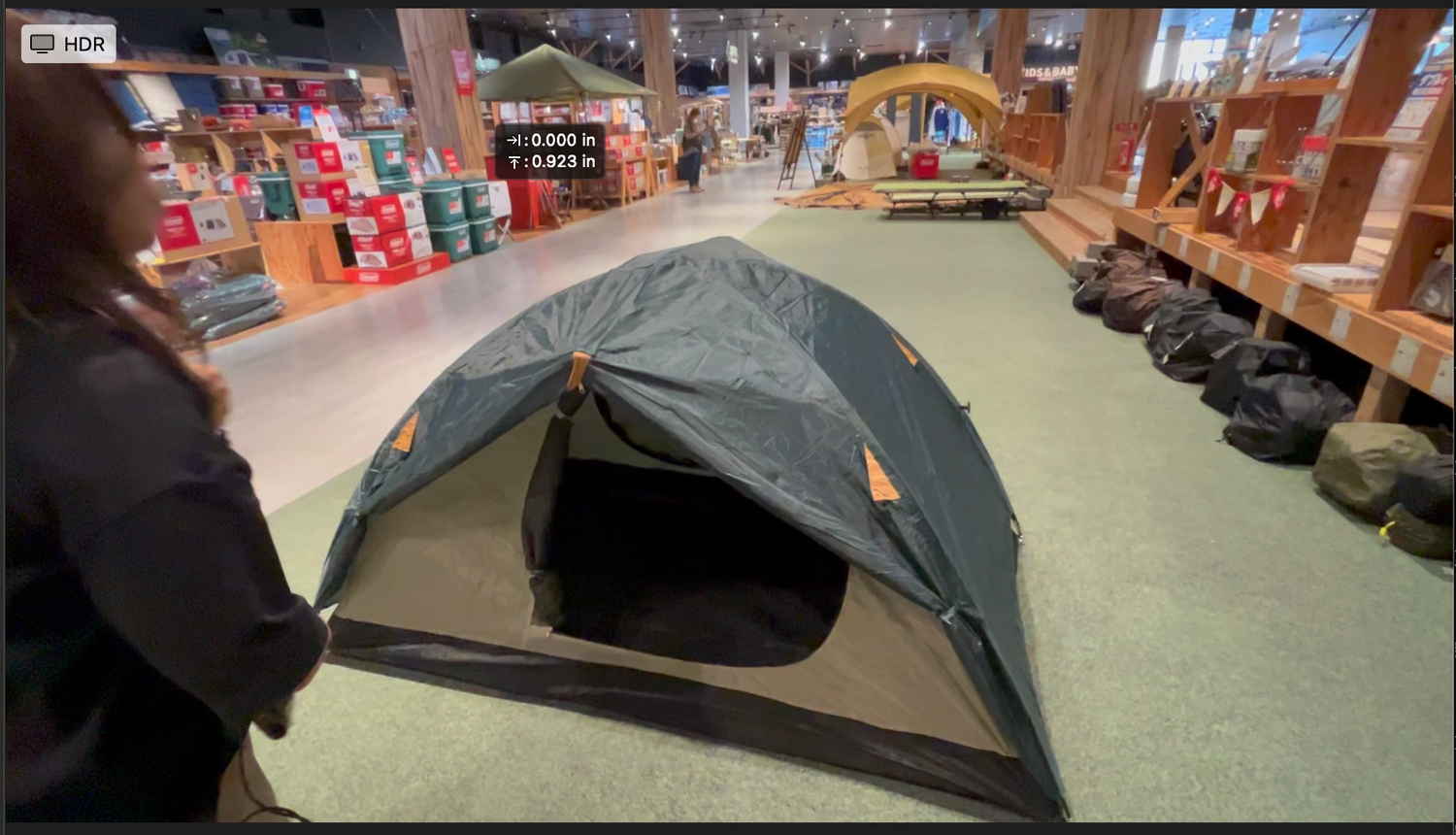
The very nice staff helped me put up the tent. At 6lbs it was pretty good
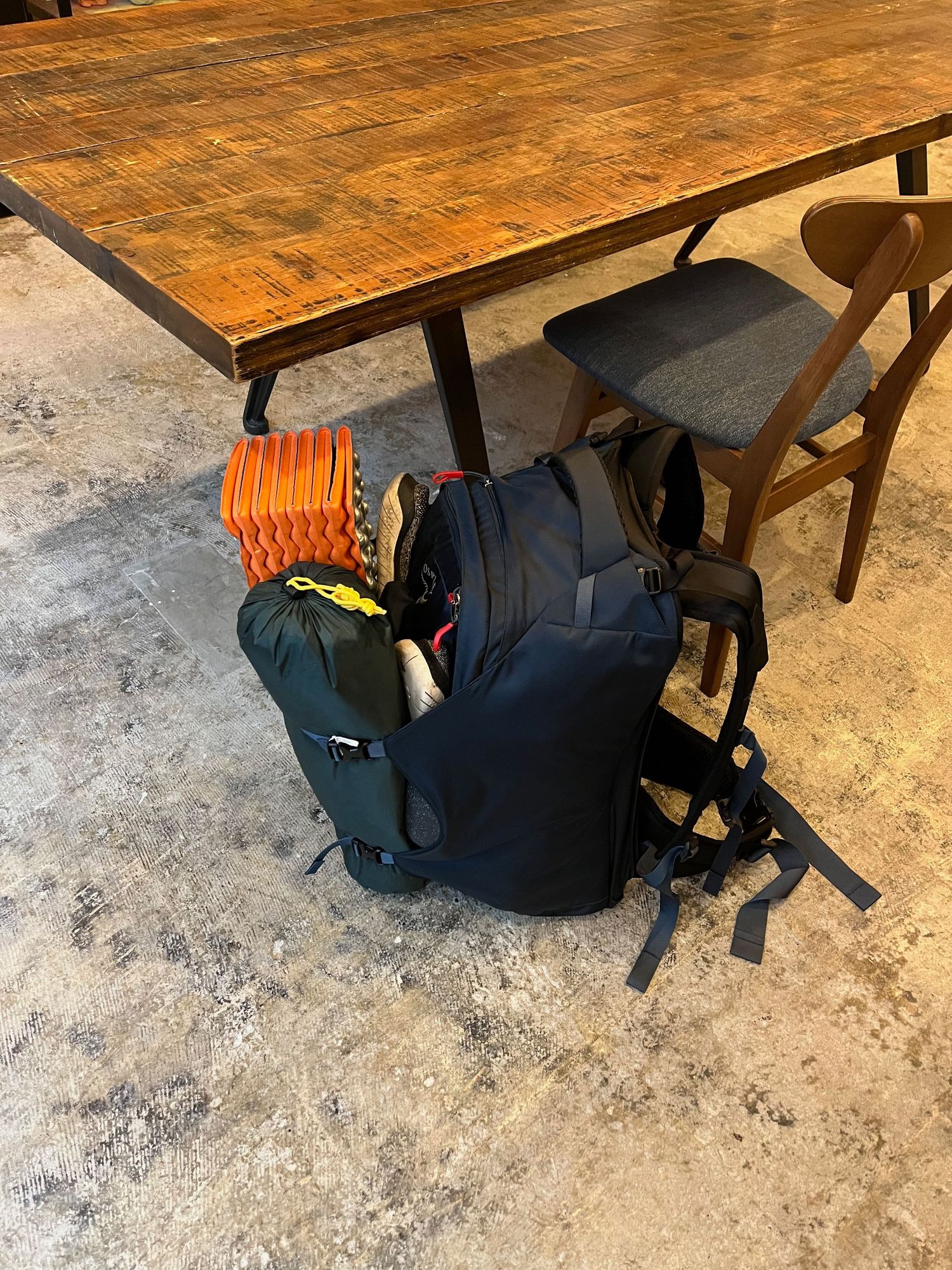
My pack seems to be getting bigger and bigger....
With a stroke of luck, my friend "Passion" who I had met during the Big Island trip was in Osaka and was very interested in the trip! The day after getting gear I took a short train to Osaka to meet up with him and start our journey the next morning.
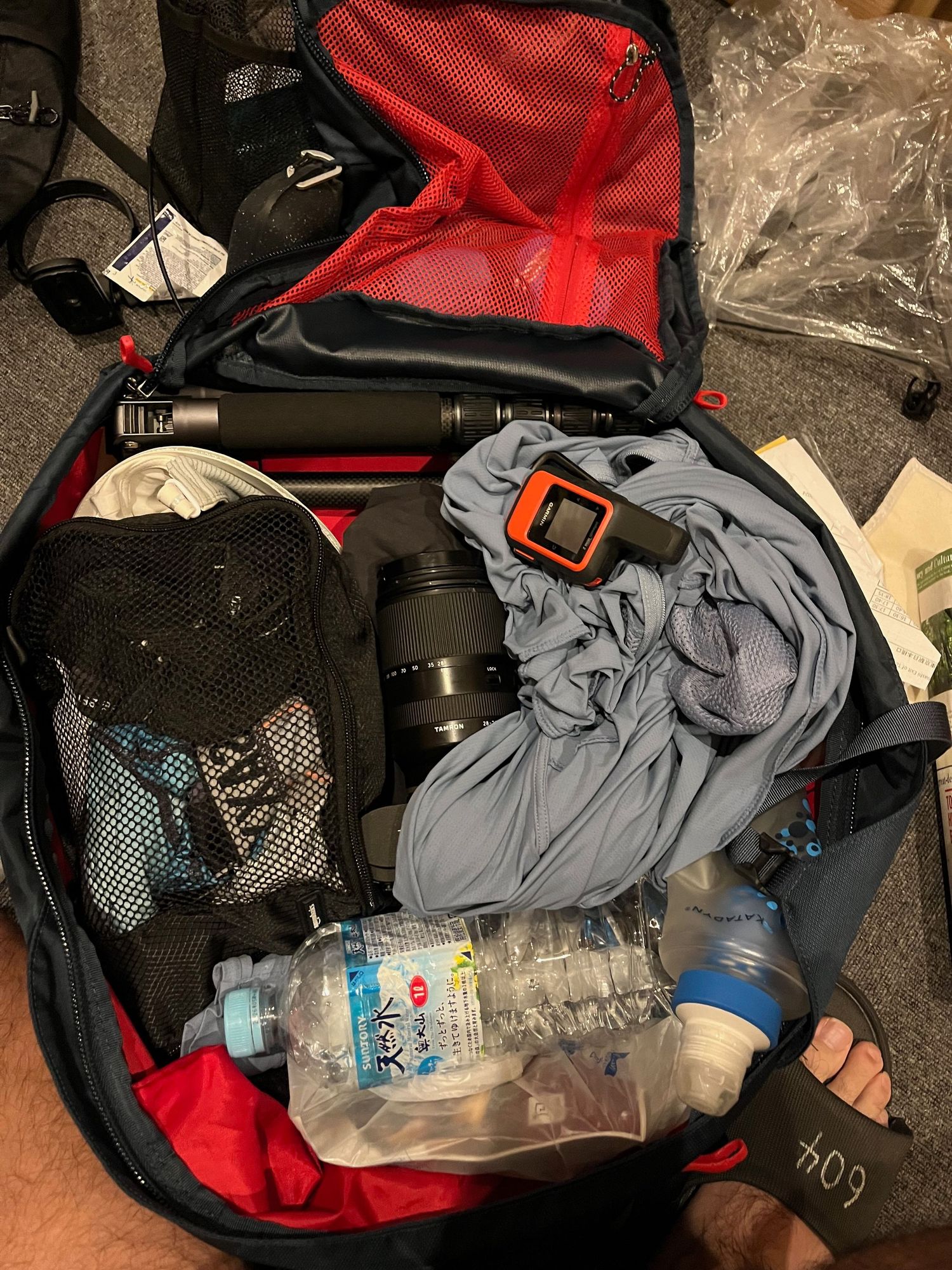
My packed bag ready for some backpacking!
The Hike/Plan
So the hike planning was a bit complicated due to various restraints, most of all our lack of budget and pre planning. First, as a UNESCO Heritage area, you can just camp willy nilly any place you want to. You have to use designated campsites of which there are few and far between. Secondly, remember the vaccines I mentioned in the previous Tokyo post? Well several of the vaccines were only part 1 of a 2-3 vaccine schedule. As such I was told that the second Rabies shot HAD to be done EXACTLY 7 days later and if not, the whole vaccine schedule had to be done from scratch. Therefore I have a cutoff where I have to leave this isolated hike and travel back to Osaka.
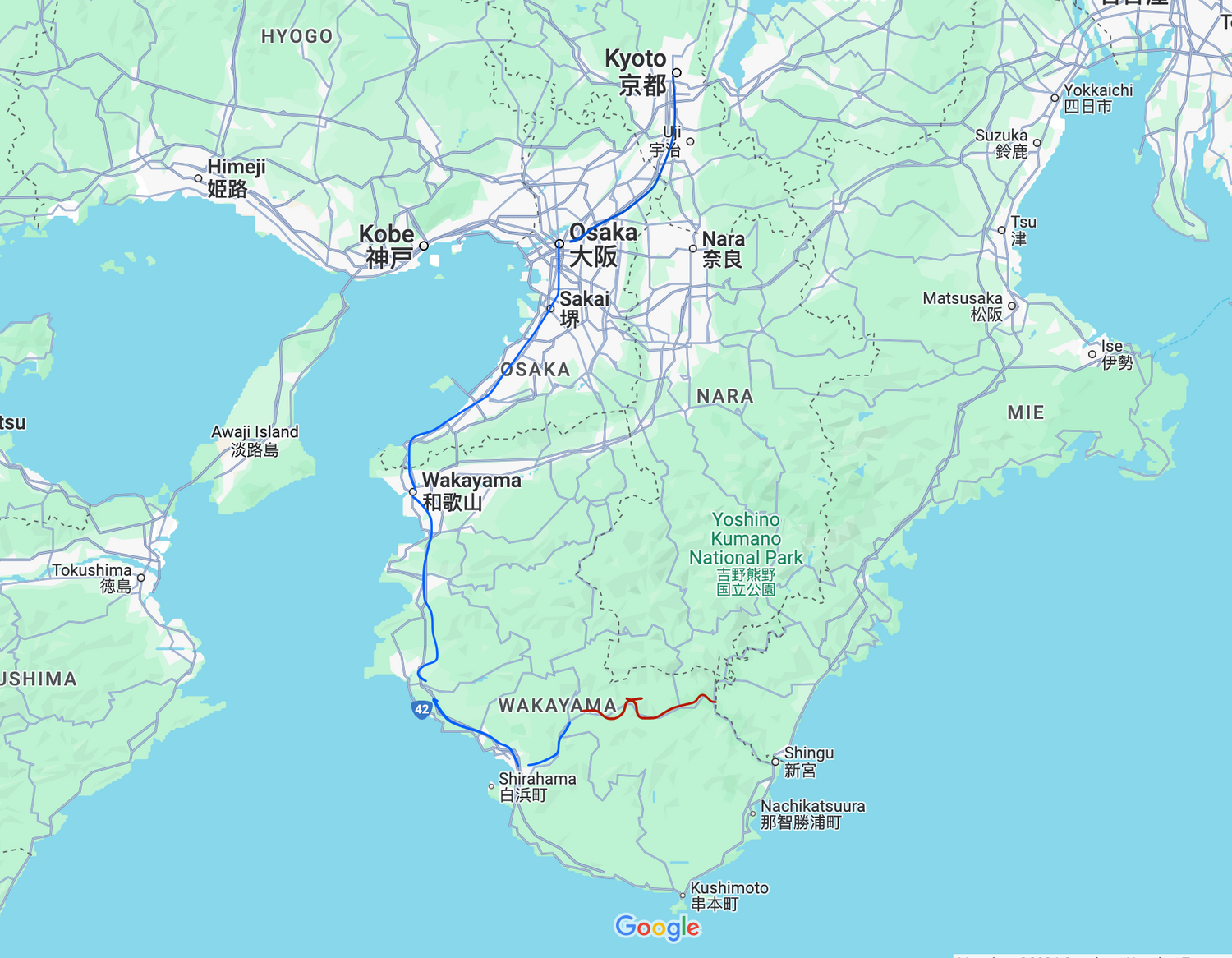
Blue: Using Trains and Buses to get to the trail head. The Hike is in Red
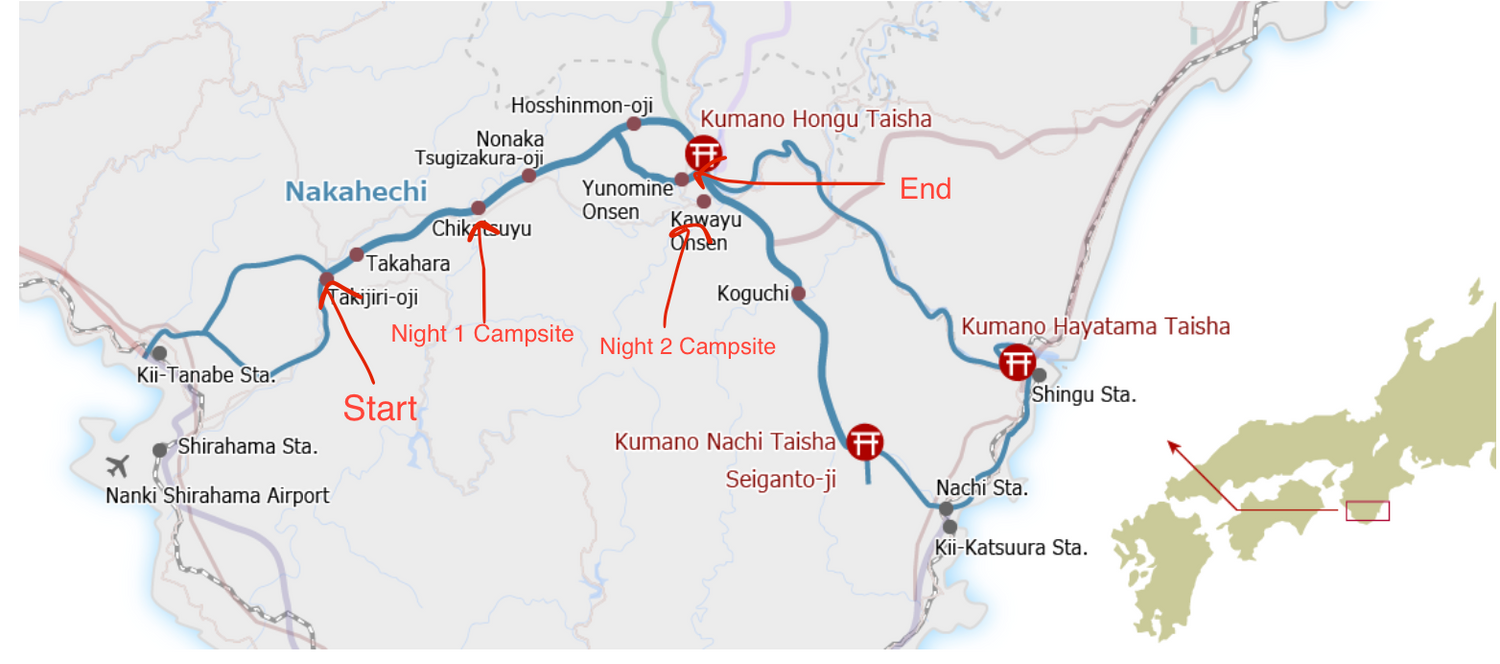
Our Hiking Route
Day 1
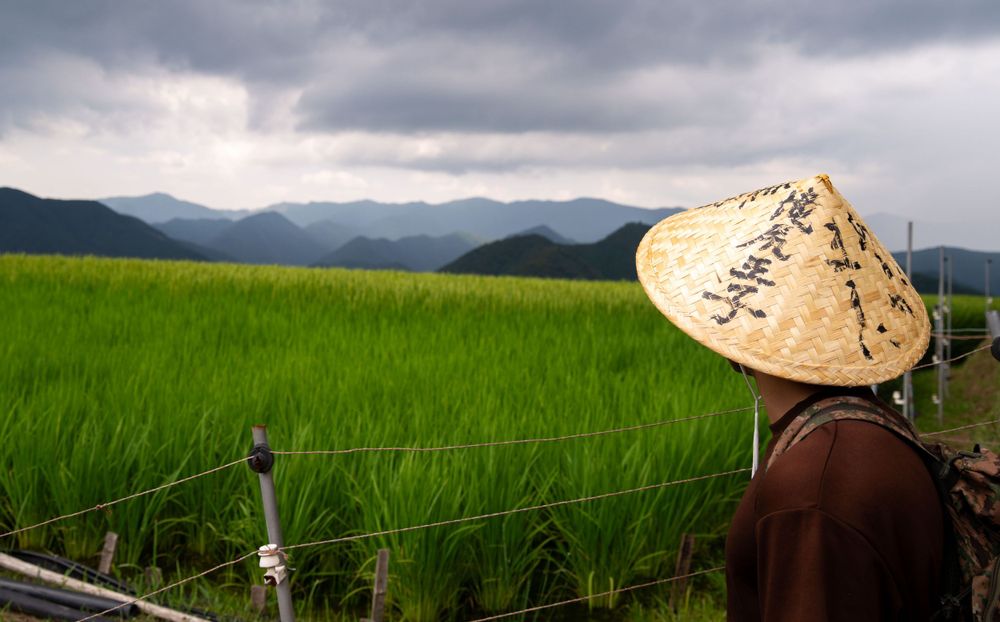
Because of the limitations of both camping and my Rabies shot, we had to do the short direct route in 2 days instead of 3. The first day we left at sunrise so that we could take the 3 trains and bus needed to get from Osaka to Takijiri. Our first day was a hard 6-8 hours of hiking with heavy elevation gain, and starting around 11:30 we knew we had to keep a fast pace to avoid hiking in the dark. While I have a full pack of water, snacks, and photo gear, Passion shows up with a 2 liter bottle of water he got at the bus station, maybe a change of clothes, his hammock, his Kendo sword he got while training in Kyoto, and his traditional farming hat he got at the start. His efficient pack combined with better fitness means he is casually walking through the trek while I am gasping for air the whole time.
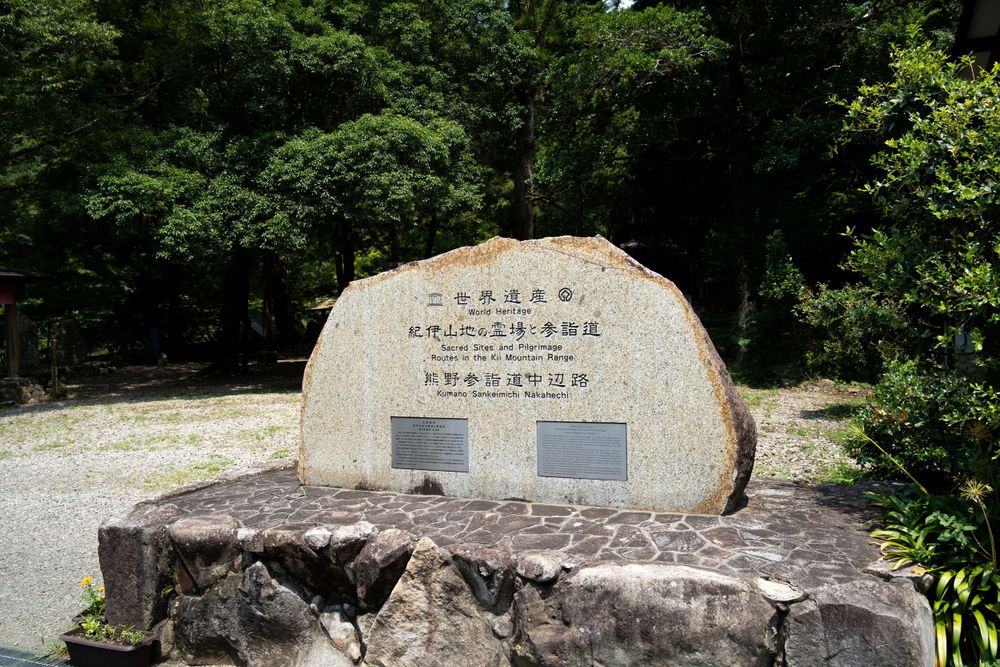
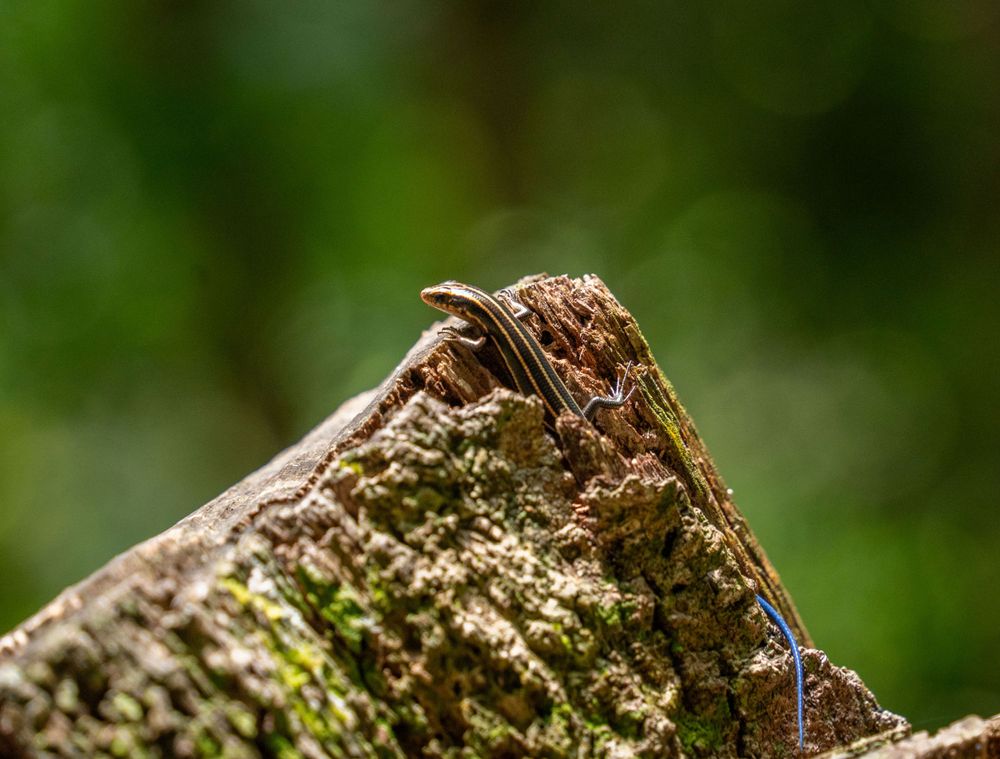
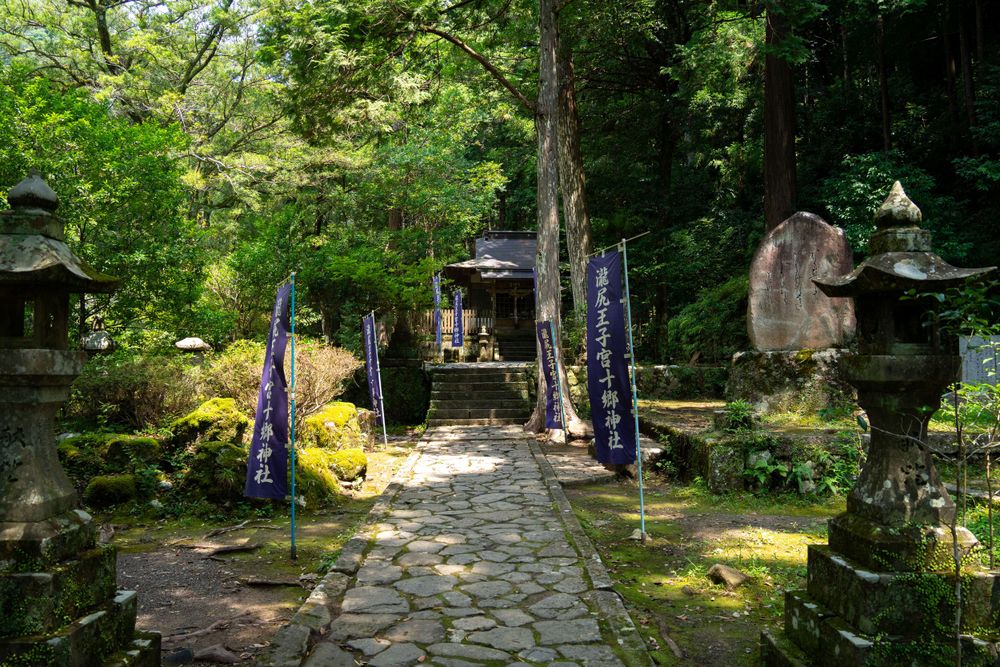
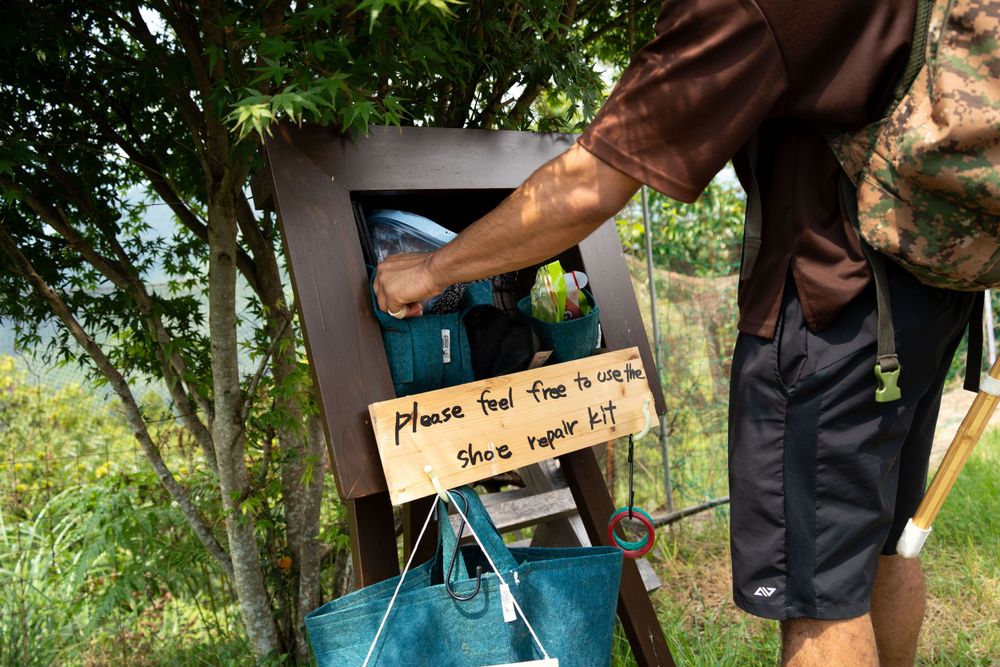
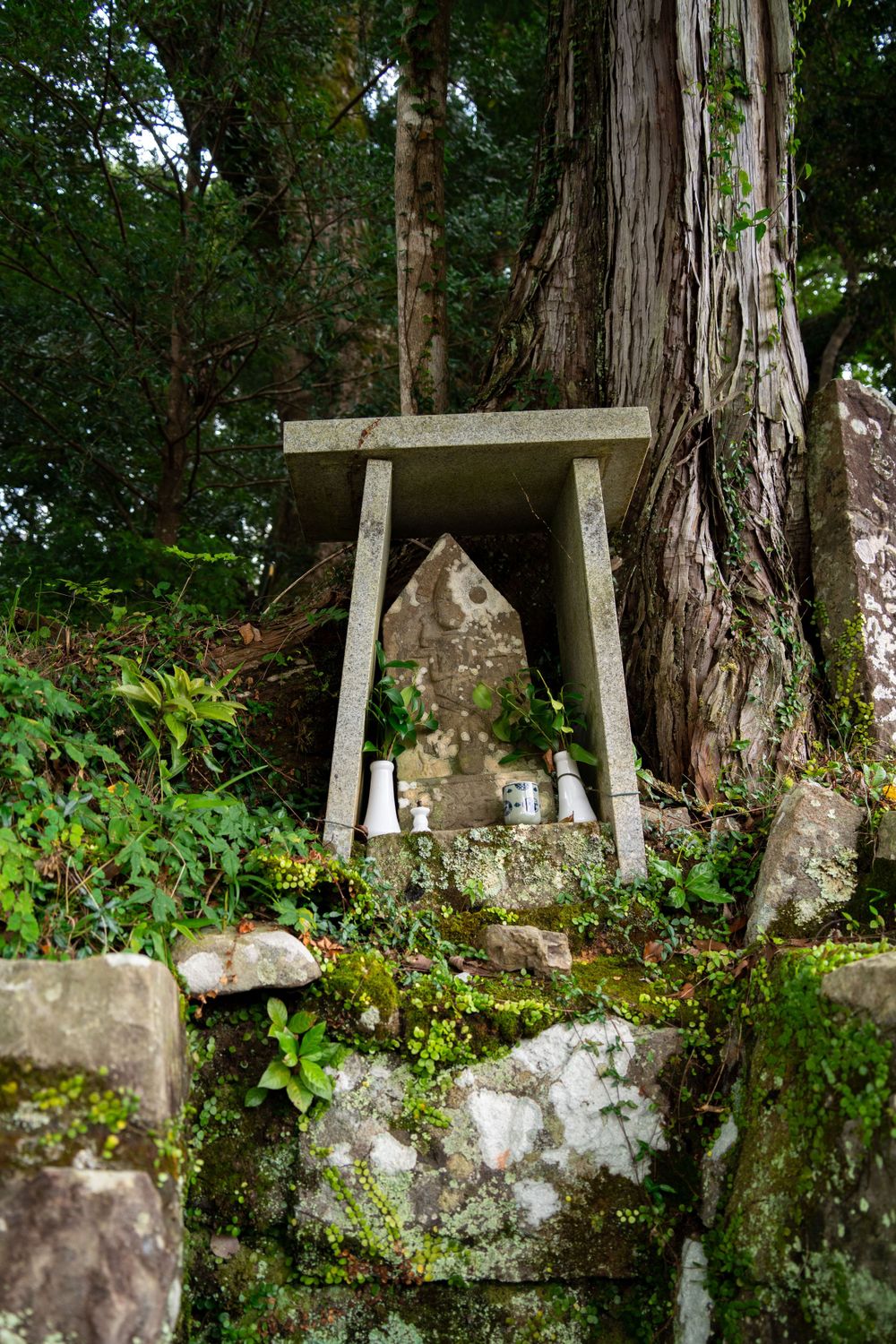
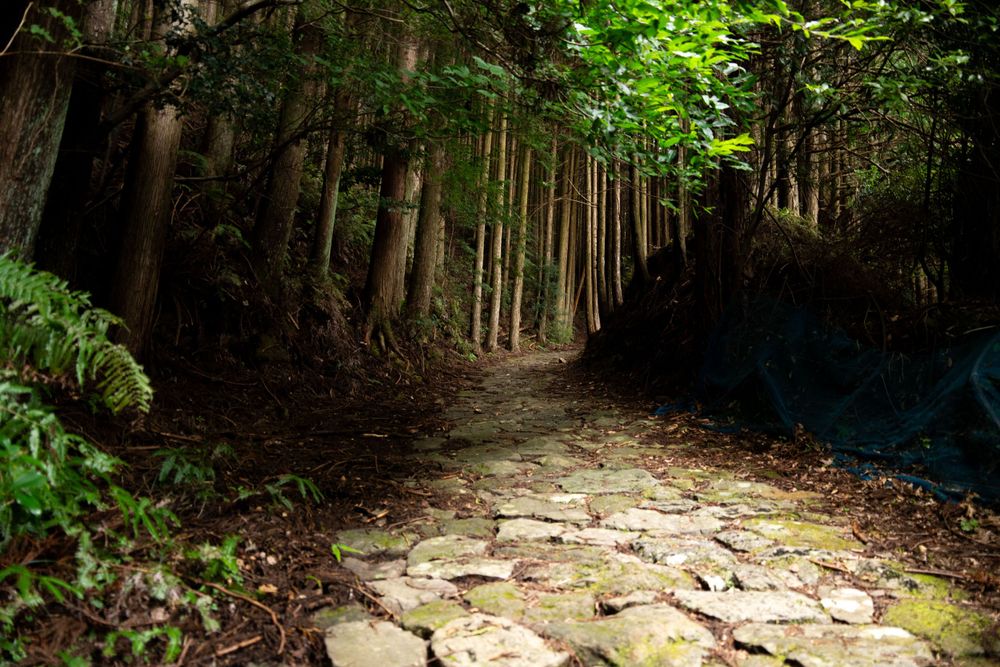
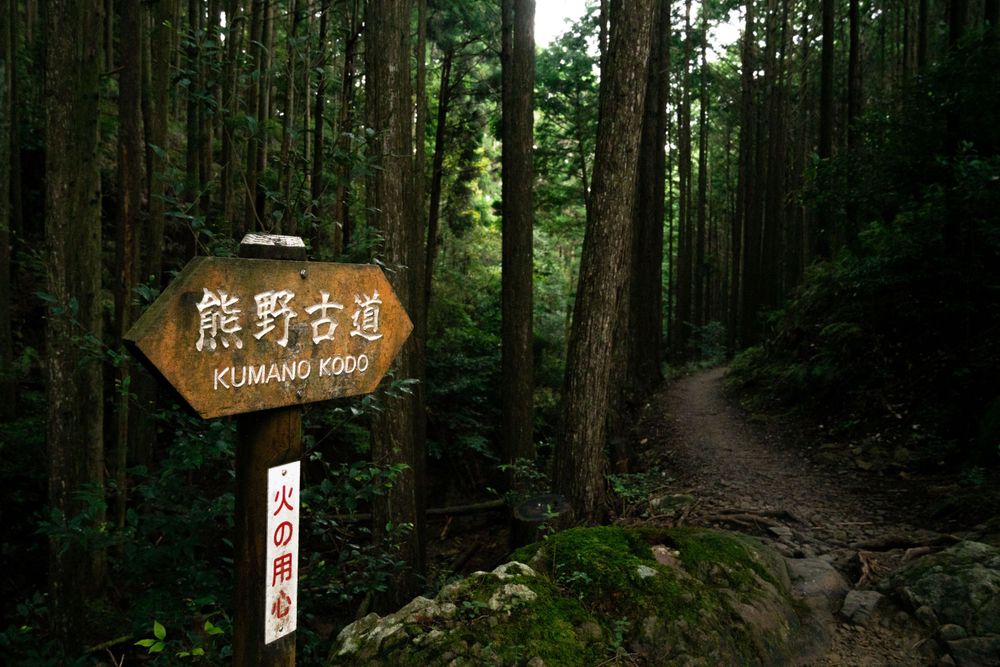
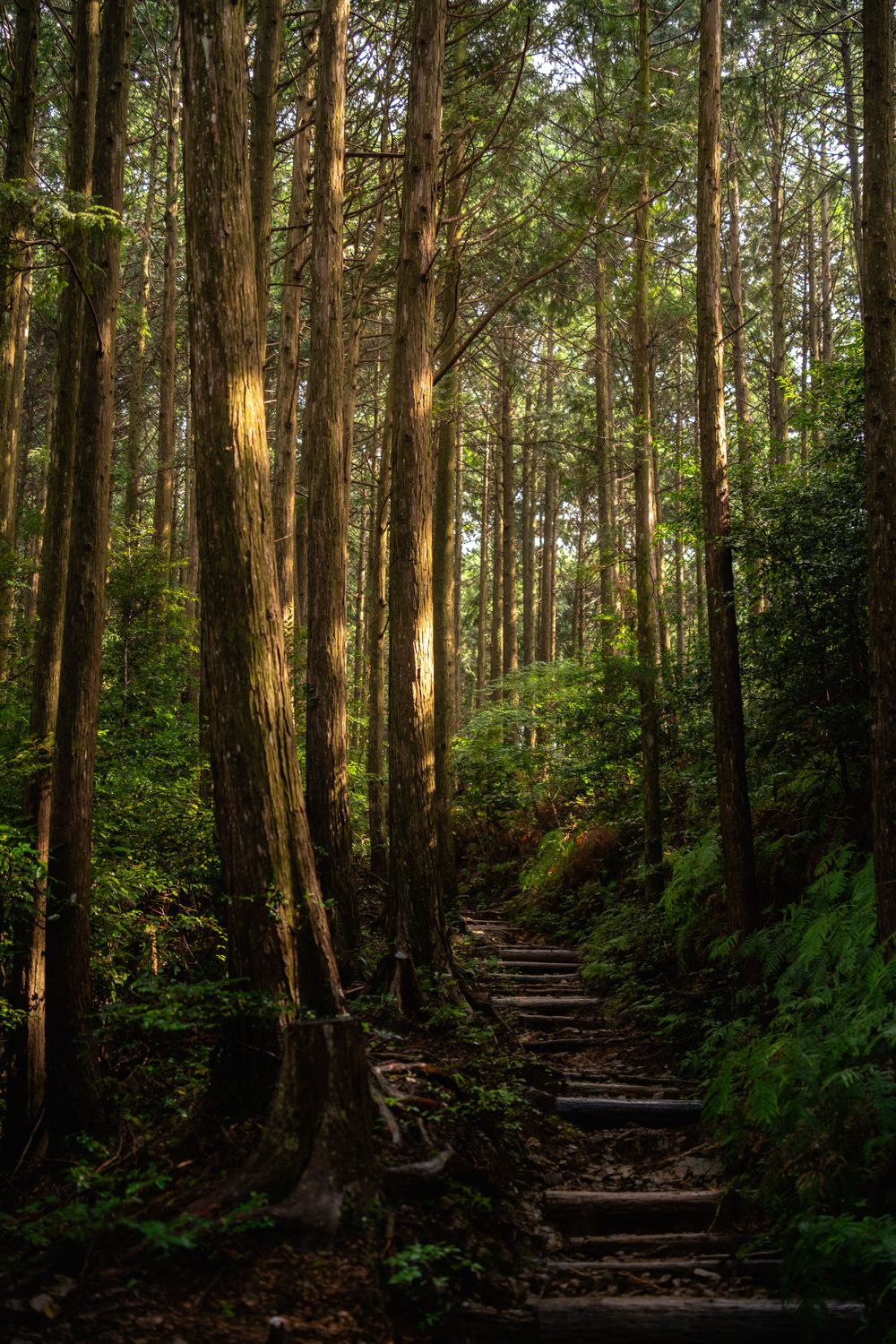
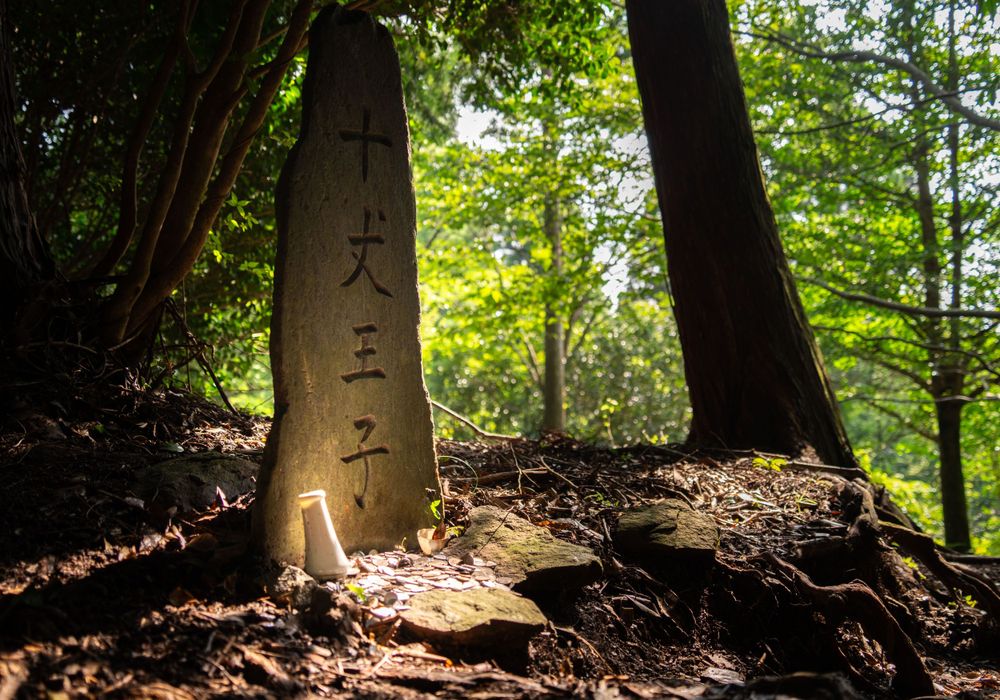
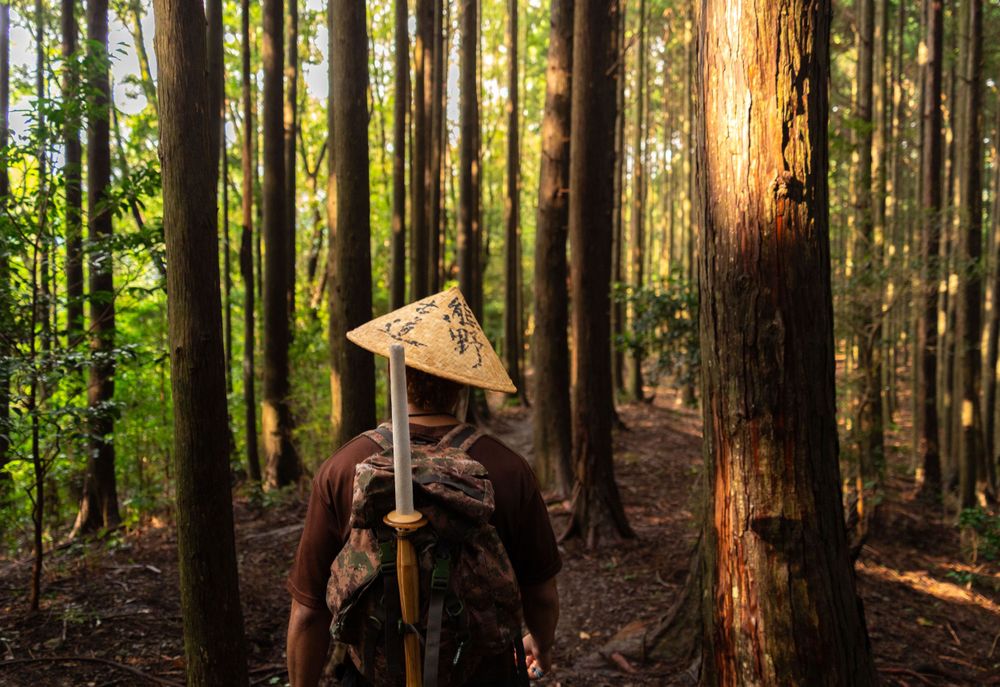
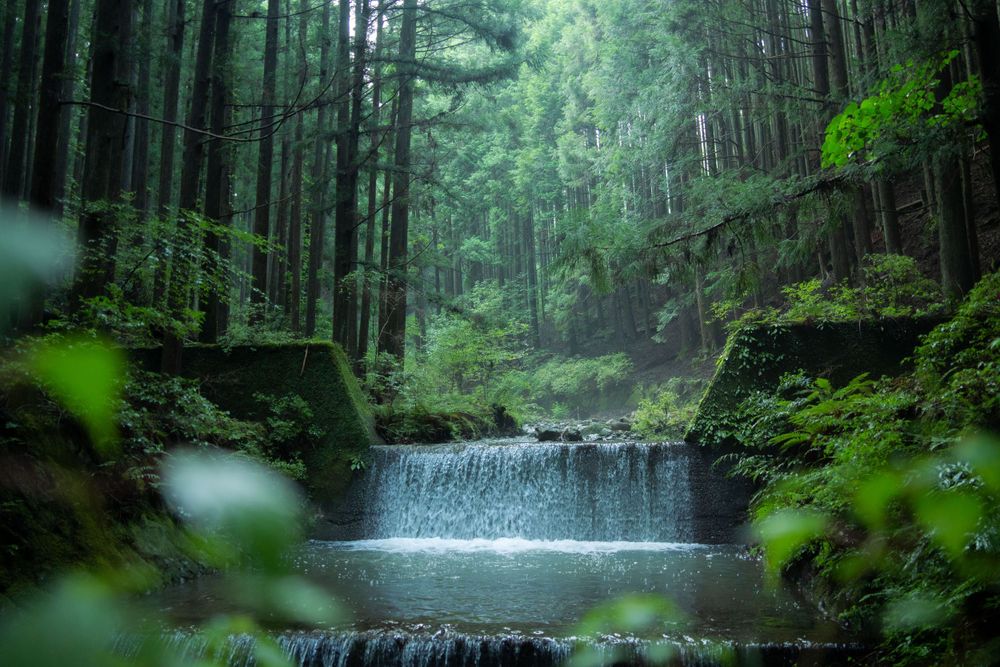
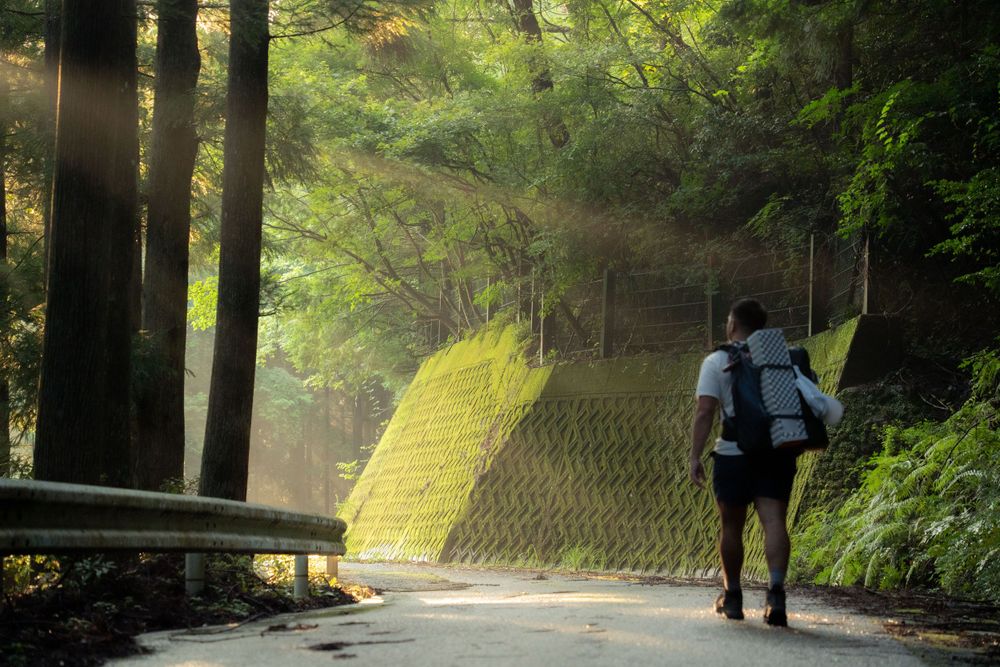
Arriving tired and starving to Chikatsuyu for our first night of camping we came to the realization that in rural Japanese villages, nothing is open past 5pm. Here we are on a Wednesday night at 6:30 and there is absolutely nothing open resembling a grocery store or restaraunt. We talk with the inn keepers at a hotel asking for any places to eat and they offer to call one of the shop keepers to open for us but if we wanted at least some food there was a beer garden nearby that was open. On our way walking to the beer garden we find a tiny grocery store built into the first floor of someone's house who was willing to sell me some Ramen. At the beer garden we find some simple food as well as a very kind owner who helps make our packaged ramen! At the garden we find two other Kumano Kodo pilgrims/hikers who were really fun to chat with. They were both extremely well traveled having already completed the Camino de Santiago in Spain, hoping to become "dual pilgrims" (a fun initiative made by the organizations of the two pilgrimages rewarding those that complete both treks). We can tell that the more experienced travelers roll their eyes at our haphazard last second trek, while we left to go set up our tent and hammock, they settled into their private inns.
At our campsite I set up the tent for myself while Passion settled into his hammock. Due to the extreme temperature and humidity, 5 minutes after laying in my tent I start to actively sweat. I decided to ditch the rain cover and hope for no rain because I need as much of a breeze as possible. Luckily the heat means I did not have to spend any money on a sleeping bag as even at its coldest its above 70 degrees at night.
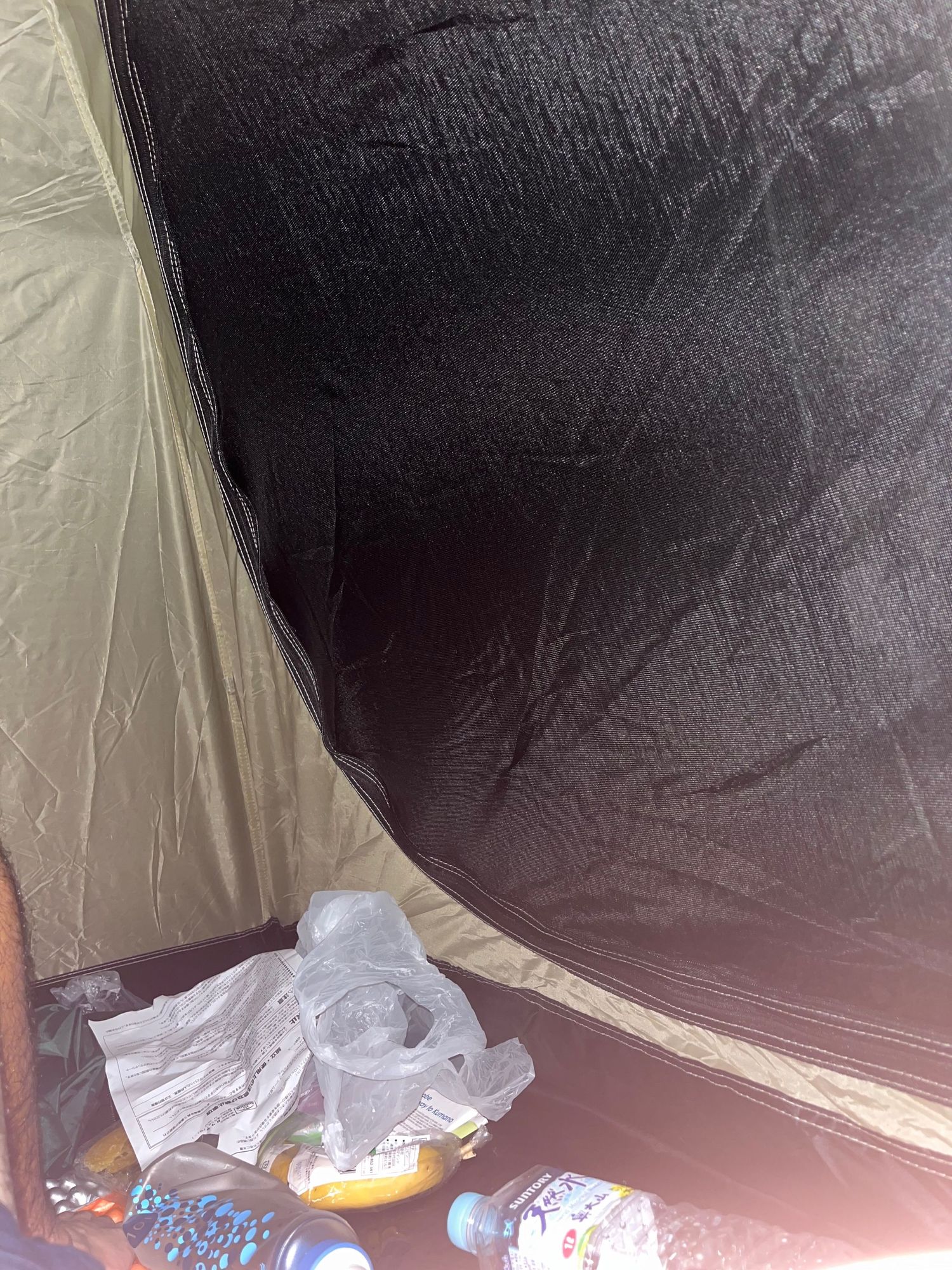
My personal Sauna aka tent
Day 2
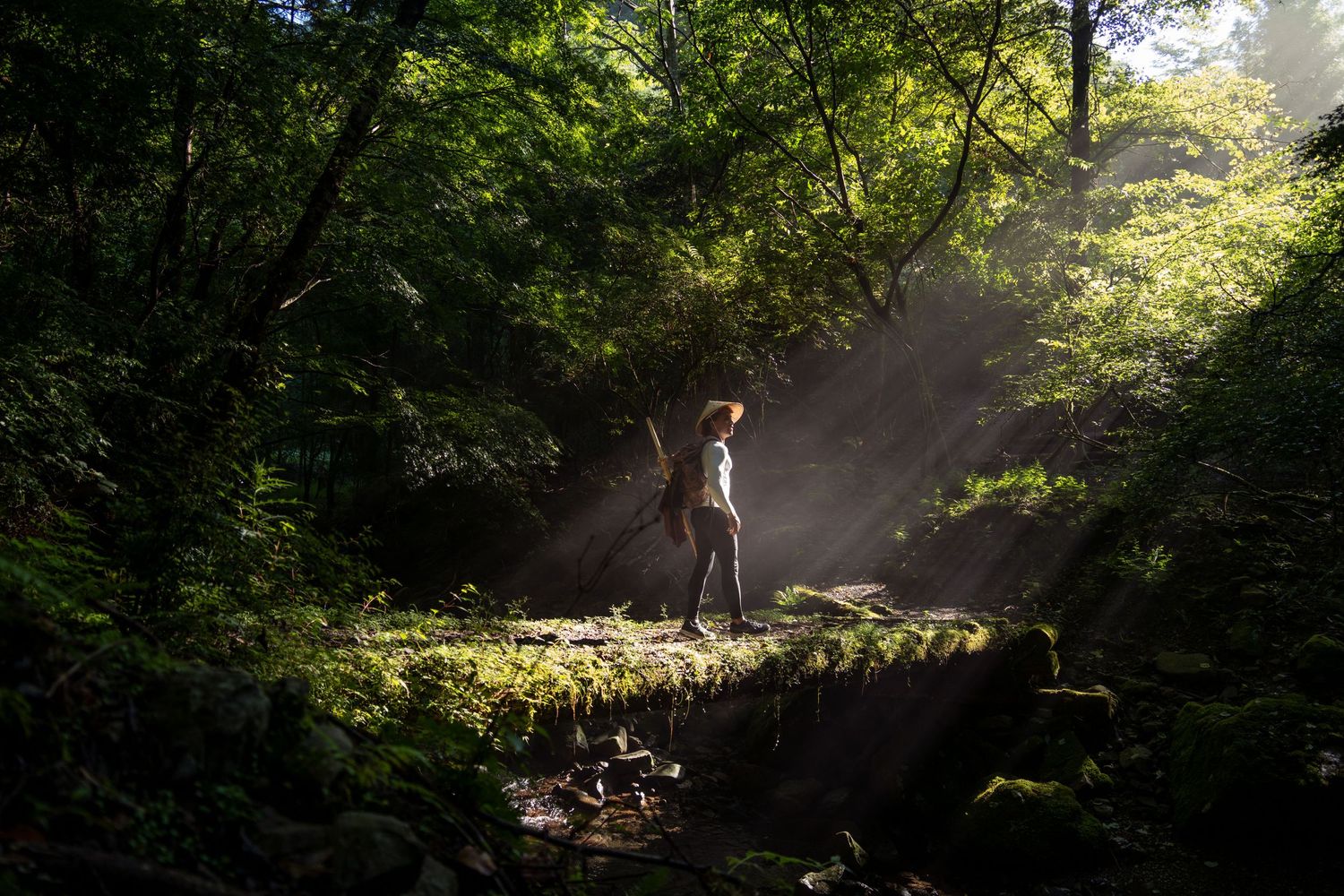
In our planning I had discovered that for Day 2 you can take a bus route to shorten the route. TO BE CLEAR, this does NOT count as cheating on the pilgrimage. It cuts out 1 hour of boring walking through the town alongside a road. The bus allows us to start back up at the base of the mountains.
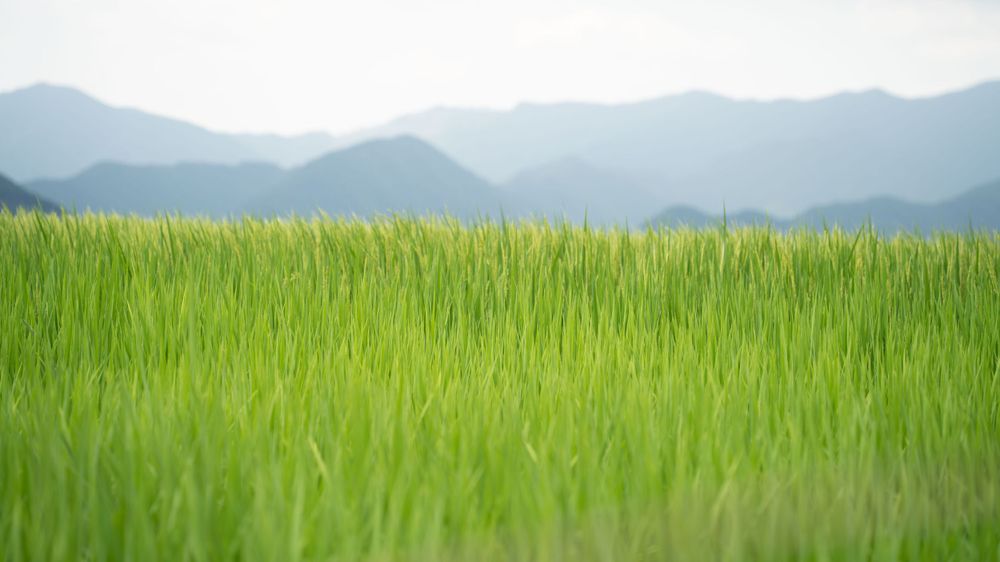
Day 2 we have another 7 hours of hard hiking to the end of the the pilgrimage, Hongu Taisha. The hike itself on both days was a beautiful trek going through rainy forests, grassy fields, rolling hills, small creeks, and dotted with small shrines everywhere. Walking through parts of the trail it does feel like going back in time and it is really cool to realize that you are walking the same pilgrimage routes that have been walked for centuries. While I'm not a very spiritual person, many people do the pilgrimage for the spiritual cleansing it is supposed to provide.
Another fun part of the trek is stamps. There were 17? 18? stamp stations along our route that you record in your stamp book both as proof of completion and as a fun memento. We stopped at each one that we could. Though some people treat these stamps as extremely important and one hiker we chatted with spent 3 hours backtracking so that she could find a stamp she missed.
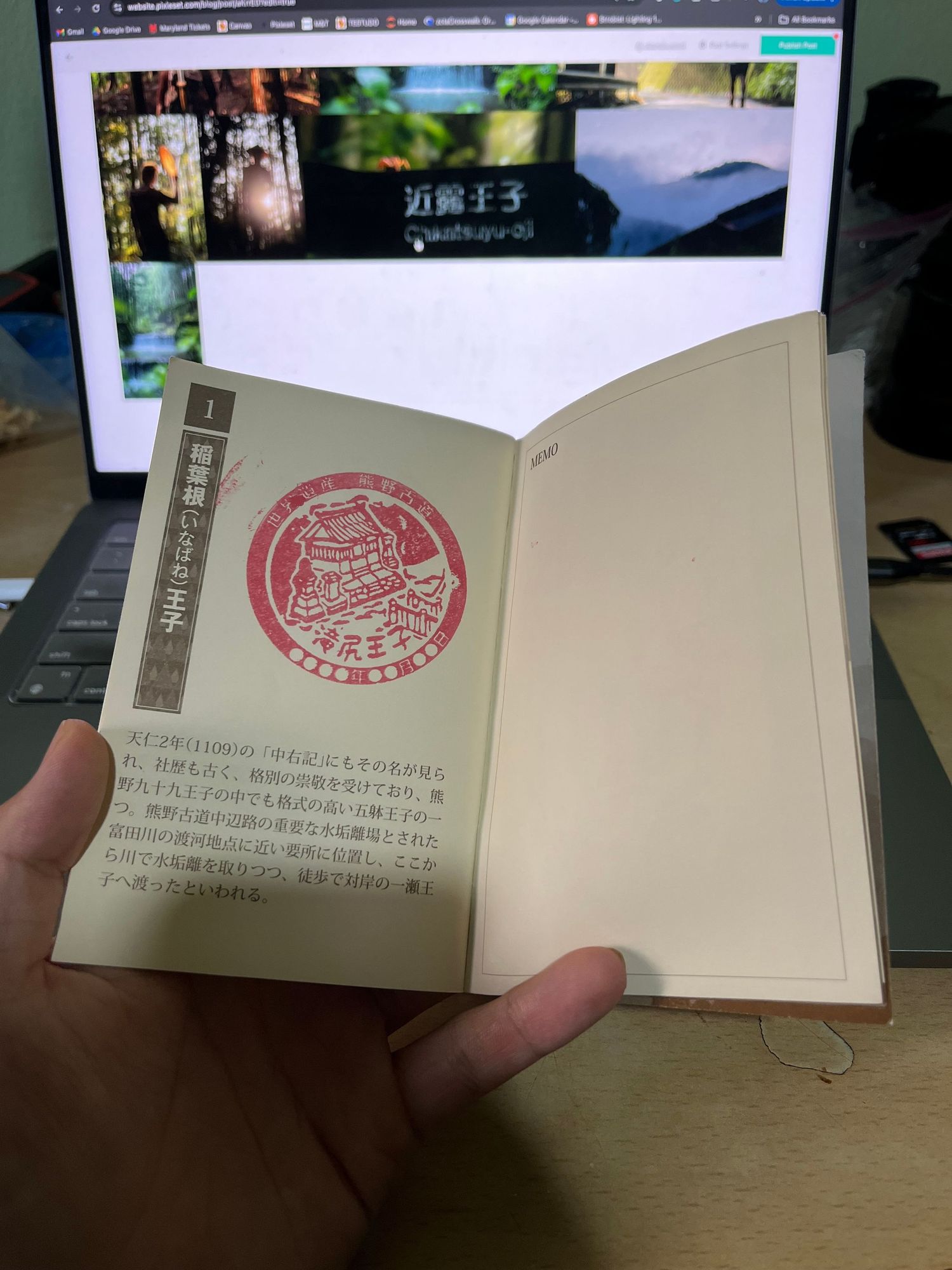
Still have my stamp booklet here in Kathmandu while writing this blog post!
Along the trail as we get closer to the endpoint of the main Shrine we cross paths with more people as they take shorter day hikes to visit. While we missed them the previous day, we met and hiked alongside a family of Chinese hikers. While the adults hike at a slow and comfortable pace, their 3 kids who I would guess were 10-16, were RACING ahead. I don't know what they were feeding them, but those 3 kids were pass us like we were standing still, and then we would catch up to them 30 minutes later as they waited for their parents.
There was also a trail runner on the second day who wore what I can only describe as sandles held together by shoe laces wearing a dragon fly cap.
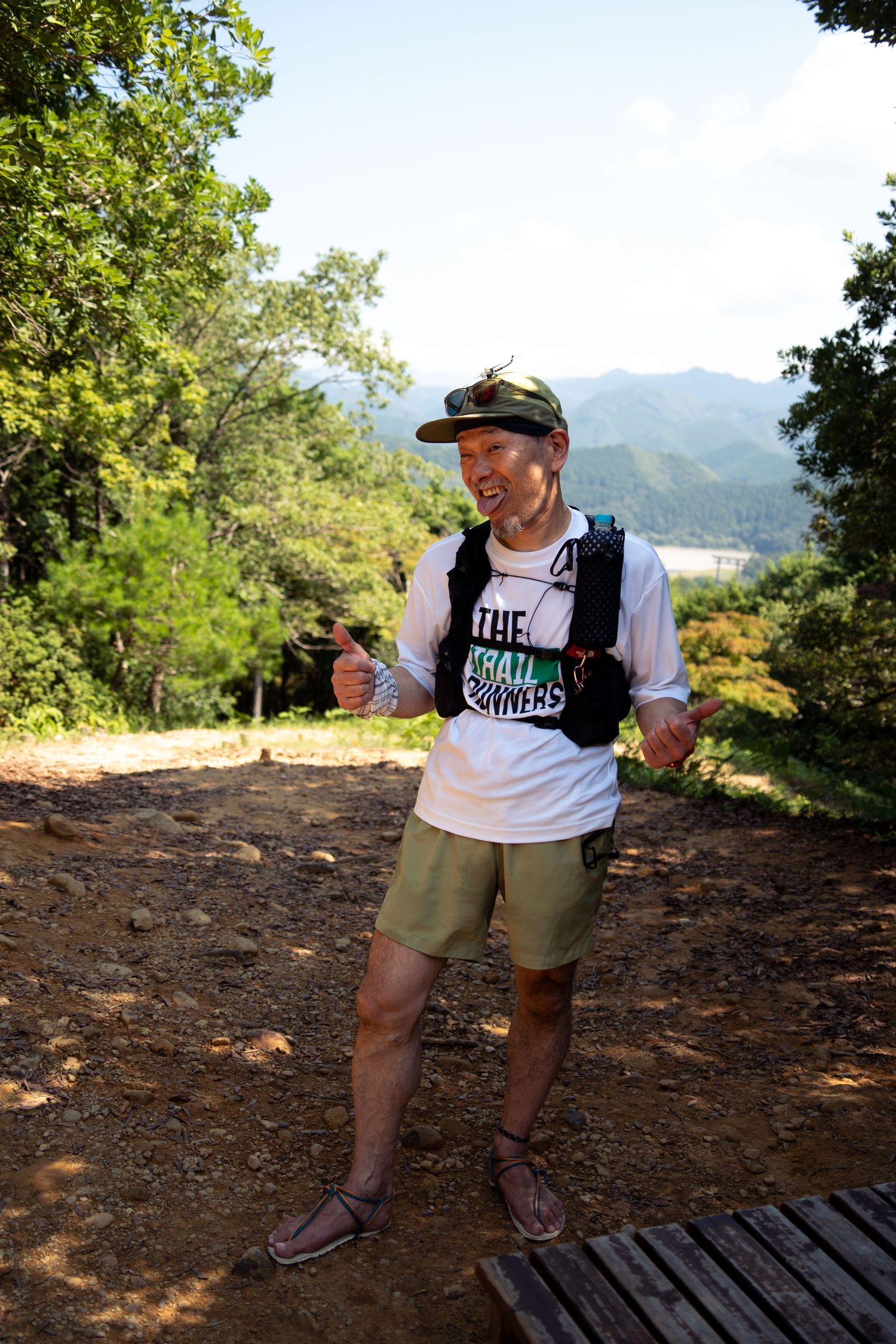
Very nice man. Apparently the dragon fly on his cap scares away the large Japanese Hornets
A funny aspect of communicating when you barely have a grasp of the other persons language is the reliance on gestures and noises. It feels quite childish with a dash of whimsy to try and have a conversation while attempting to mimic your sentence. We could've used his dragonfly wisdom because we were plagued by large bugs the whole hike which I HATED. These large hornets never stung us but would follow us for up to 20 minutes at a time no matter if we walked or ran away. Lots of dragon flies, cicadas, mosquitos, and hornets.
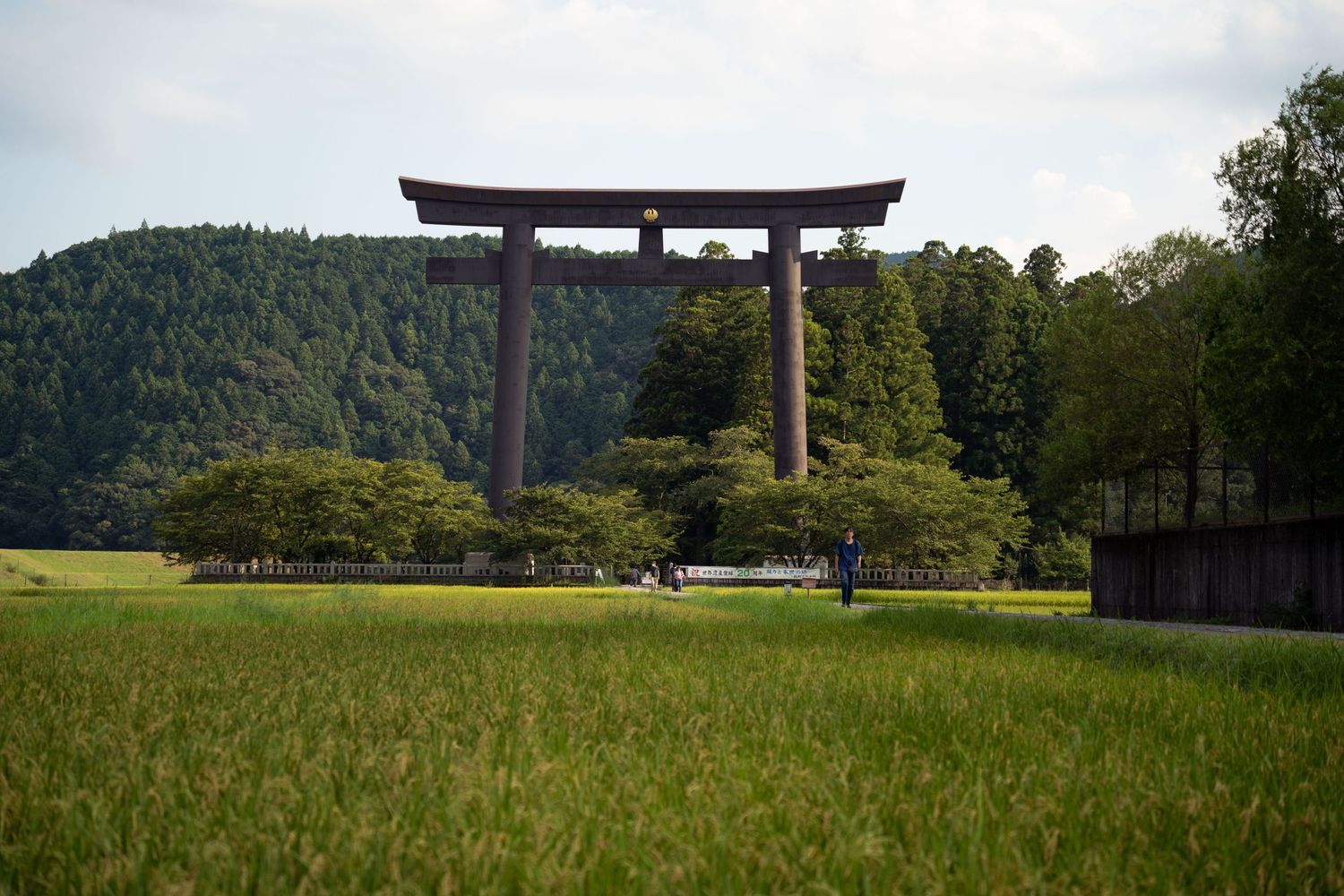
This not the shrine but just a cool massive gateway they built at the town
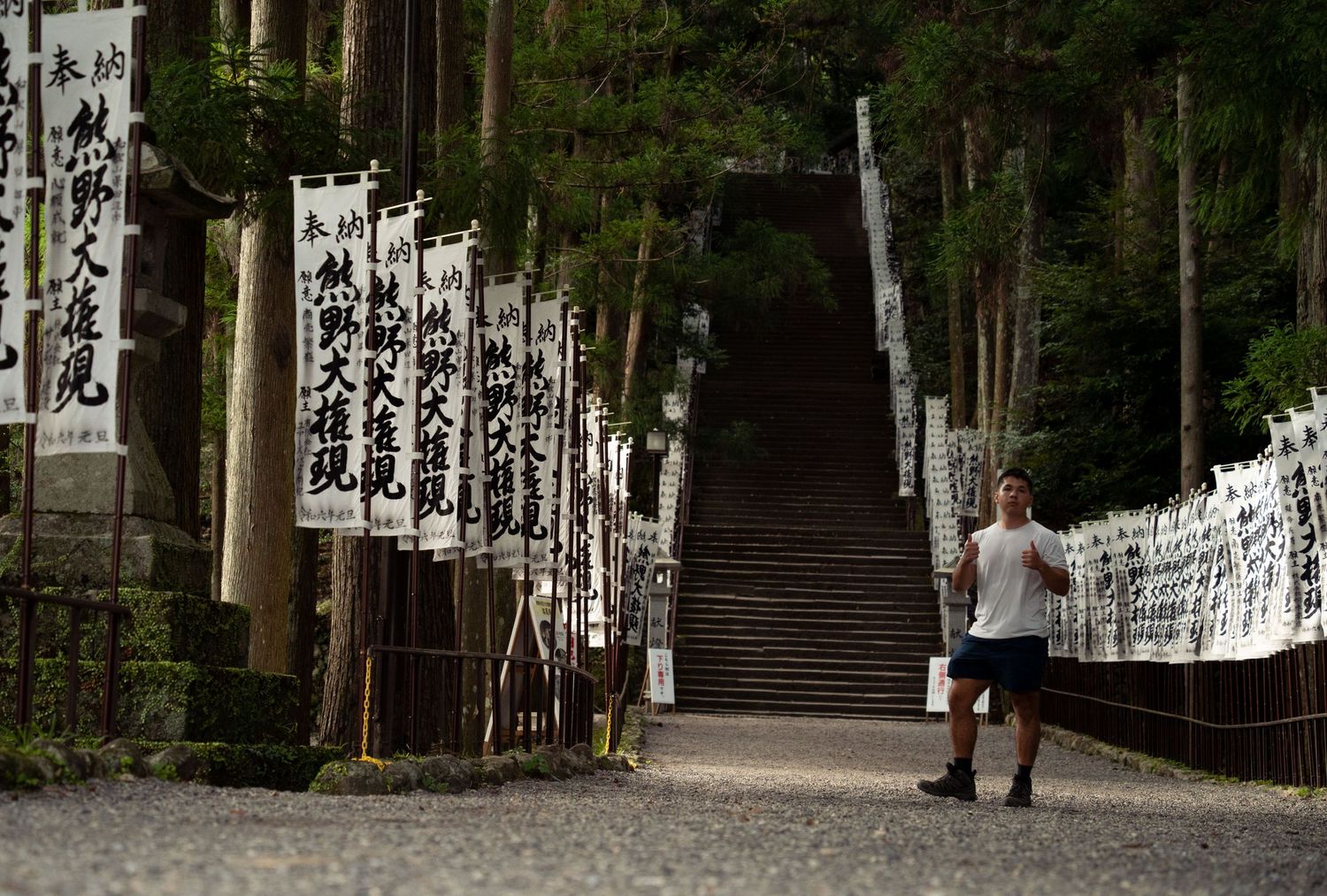
This is the walkway to the shrine
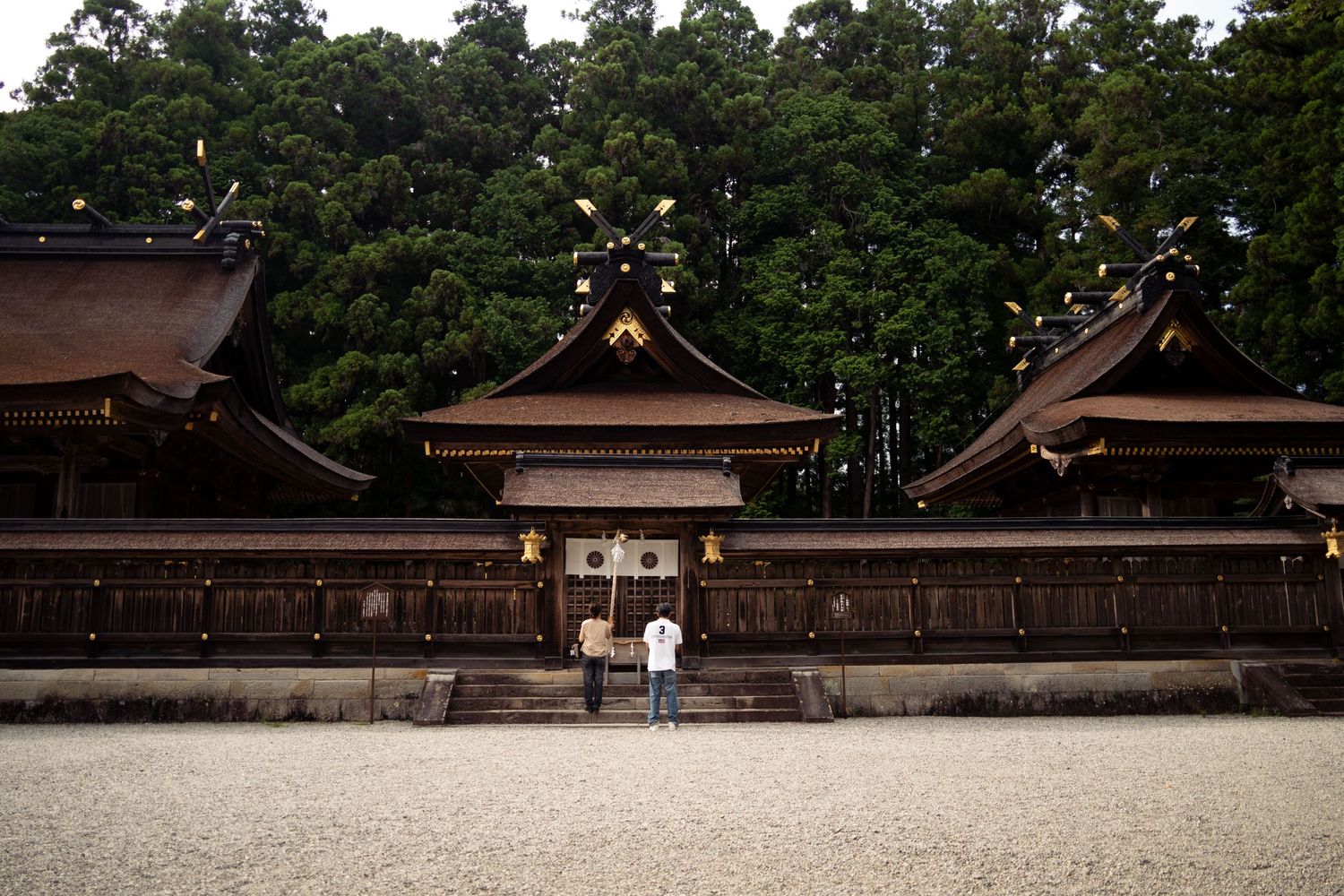
And here is the actual end point shrine!
After visiting the shrine and getting some very well deserved food at the only open restaurant. We tried to get our completion certificate. It turns our however that we missed 1/3 of the stamps!! Which I find ridiculous because we stopped at every one we could find ON the trail. Oh well! However the stamps we had were enough to convince the Heritage Center worker that we did in fact complete the pilgrimage so he signed off the Kumano Kodo half of the Dual Pilgrim pamphlet (much less stringent requirements). So if I go to Spain and complete the camino bringing that proof with me I could be a dual pilgrim!! (doubtful I don't lose the pamphlet between now and then)
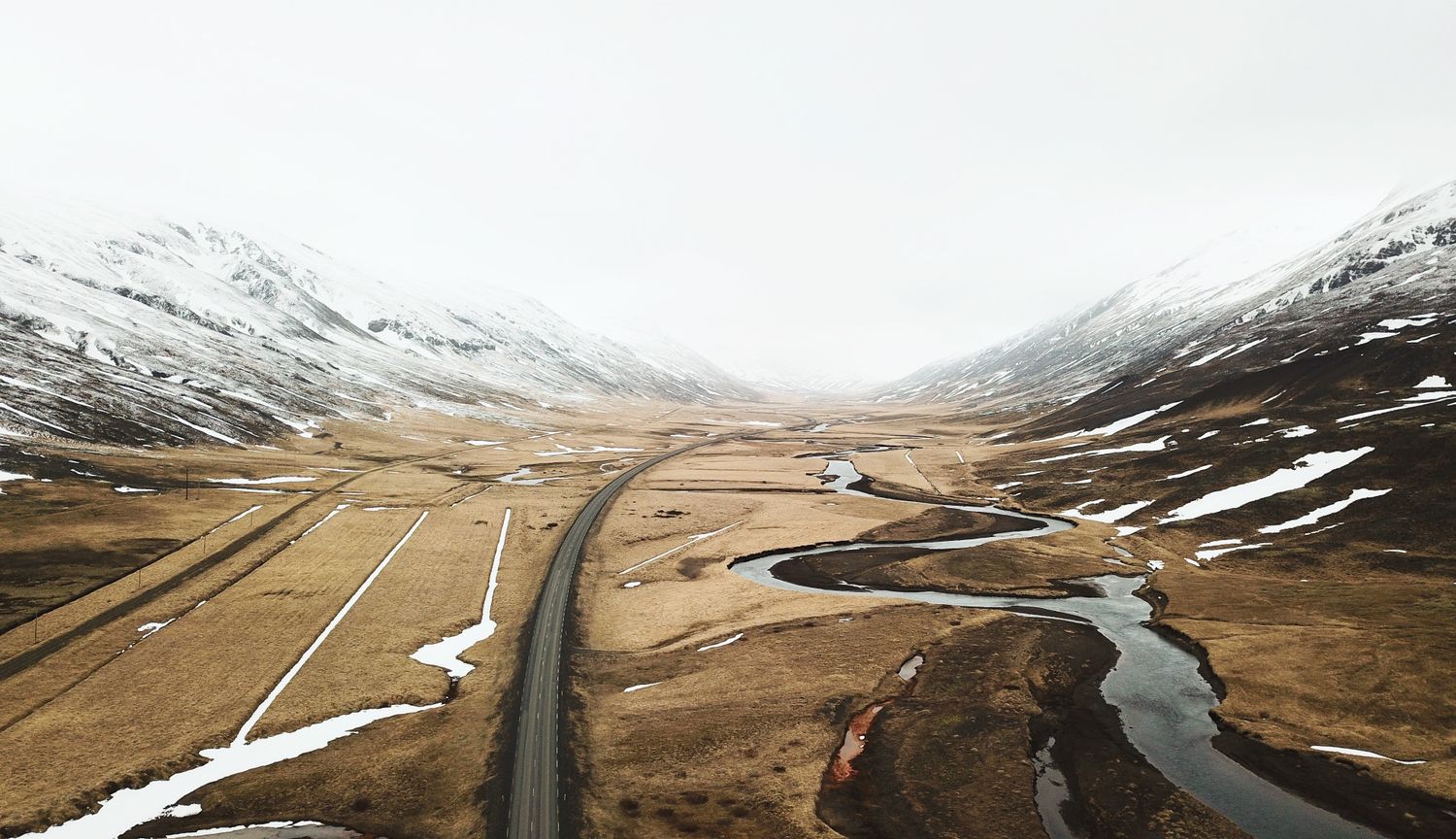
Afterwards we took a bus to our campsite which right along the river which was one of the most lovely swims I've had after 2 very sweaty days. After a night of sleep that brings us to the end of this Journey!